
Insights
Fulfilment activities, the critical steps involved to get drug product to the patient
In the first of our commercial insights interview series, we focus on the considerations to be made when selecting service providers for fulfilment activities. To those new to launching drug products on to the market or rolling out products into new territories this interview provides an insight into those activities commonly outsourced and the challenges that companies may face when identifying suitable service providers.

Introduction
Ian Robinson, Group Business Director for Central Pharma provides his insights into the role service providers can play to support licence holders with these critical supply chain activities.
Ian has almost 30 years Pharma, Medical Device and Healthcare experience. Having worked with organisations ranging from the World’s largest healthcare conglomerates through to SMEs with virtual capabilities, Ian understands the wide spectrum of requirements sought by outsourcers of various sizes and shares his experience to highlight the criteria that underpins delivery across all projects, ensuring the product reaches the patient.
Defining Fulfilment Activities
1. Please can you describe those
activities that would fall under the
description of 'Fulfilment'.
There are a number of activities that
would be classed as 'fulfiment services'
ranging from filling and packing to
specialist storage and transport. Some
service providers can even support the
entire supply chain with the additional
offering of regulatory support,
import/export and QP release.
Essentially from simple transaction
services to full partnership with
responsibility for the supply chain post
manufacture to patient.
2. Which fulfilment-related
activities are most commonly
outsourced in your
experience?
Storage, specialist storage and filling
& packing.
3. Why are these activities most
amenable to outsourcing?
Storage is commonly an issue for license
holders as they grow and simply outgrow
their original sites. Some contract
packing organisations can offer
solutions to this with short-, medium-
and longer-term capacity support.
Similarly, these service providers may
offer advanced technologies with higher
speed throughput and traceability
advancements without the need for
outsourcers to deploy the extensive
capital expenditure.
4. Are there fulfilment activities
you believe should always remain
in-house? Why?
No. Historically license owners would
retain control of certain aspects of
their supply chain but as contract
packing organisations have become more
sophisticated it is possible and often
advantageous to outsource their entire
manufacturing / operations function to
improve lead times and lower costs.
5. Do outsourcing needs change
depending on whether it's a new
product launch vs. an expansion into
a new territory?
All new projects require a very detailed
assessment of their needs with no two
projects being identical. Whether a new
product or an expansion of geographic
territories, it can present unique
challenges such as scalability or
satisfying a set of localised quality
regulations. 'The devil is always in the
detail'.
Differentiating between service providers
6. What prerequisites do you think are essential for a fulfilment provider? In terms of:
a. Quality provision/systems.
b. Facilities and process capabilities
c. Geographic positioning
a. Quality provision/systems
A fulfilment provider should have robust quality management systems in place — ideally certified to recognised standards such as ISO 9001 or GDP (Good Distribution Practice) where relevant. Prerequisites include clear SOPs, full batch traceability, validated IT systems for stock control, staff training programmes, and a strong culture of compliance and continuous improvement.
b. Facilities and process capabilities
Facilities must be fit for purpose: secure, clean, and appropriately designed for the types of products being handled (e.g. temperature-controlled areas for pharmaceuticals, segregated zones for different customers). Core prerequisites include scalable storage space, efficient picking and packing lines, automated tracking technologies (barcode or RFID), and the ability to integrate with customer systems. Flexibility and resilience in logistics processes are equally vital to adapt to changing demand and ensure reliable, on-time delivery.
c. Geographic positioning
Geography can't be ignored but with the dawn of hyper-efficient global logistic partners, there is often minimal impact on logistics timings and costs, agnostic of despatch location and destination.
Challenges & Risks
7. What are the most common fulfilment challenges companies face during a launch?
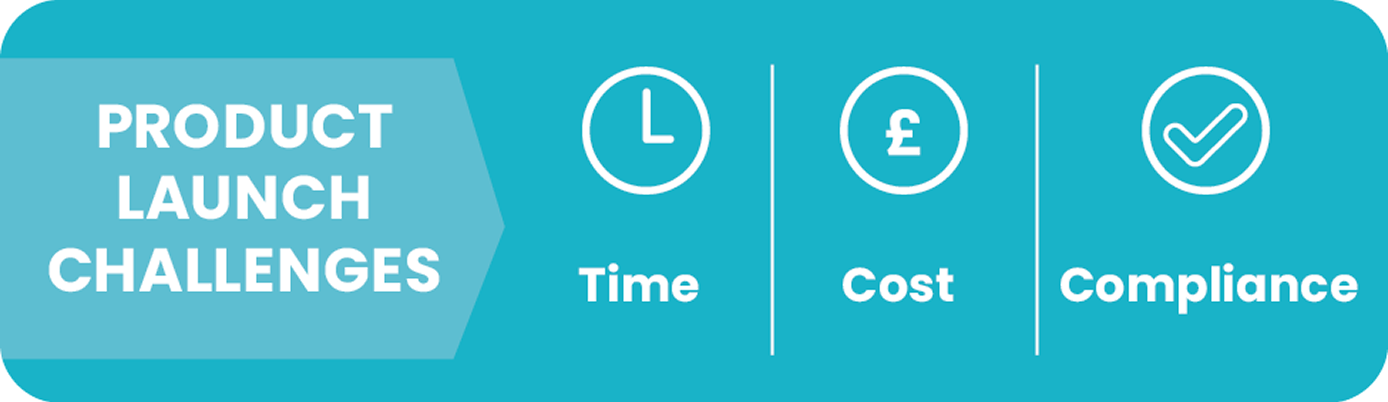
Time, cost and regulatory compliance are three areas worthy of particular attention during a product launch. Outsourcing can often provide the most efficient solution for companies looking to achieve the best results for these three challenges, guaranteeing compliance, lead-times and maximising financial returns.
8. Are there specific fulfilment challenges unique to certain regions? (e.g., EU serialization, US distribution networks, emerging markets)
Different regions carry many different regulatory requirements, using a contract company to navigate this tricky road often removes the uncertainty and worry, brand owners may face. Nuances of serialisation regulations for example can seem minimal but can carry catastrophic project issues if the technology to execute the local market requirements is not in place.
Best Practices
9. How can outsourcers ensure seamless communication and alignment between their internal teams and fulfilment providers?
Effective communication between all parties is pivotal to success. The means of the communication is of secondary importance behind the absolute requirement of regular and transparent data exchange. Having the ability to map out all tasks within a project that are correctly sequenced and assigned, ensures deadlines are met and that ultimately, the project is delivered.
10. What advice would you give to companies outsourcing fulfilment for the first time?
Explore a number of contract companies to see their capabilities and ensure you feel comfortable with the Team that you are entrusting, with your product / reputation.
Looking Ahead
11. Are there emerging areas (e.g., direct-to-patient delivery, digital supply chain tracking, personalised medicine) that will require new approaches to outsourcing fulfilment?
New treatment areas such as CGT require a new way of thinking when it comes to logistics. Treatments simply have to arrive at their final destination on time, whilst maintaining their essential temperature condition. Packaging solutions for transport have evolved to meet these exacting requirements and now incorporate temperature maintenance / tracking technologies along with real time GPS data. Whatever your requirements a good contract organisation should always be able to find a solution that meets the brief in a cost-effective manner.
12. If you could improve one aspect of how the industry approaches outsourced fulfilment, what would it be?
If I could improve one aspect, it would be the way the industry approaches partnership. Too often, outsourced fulfilment is treated as a transactional service focused only on cost. A more collaborative approach, where brand owners share forecasts, challenges and long-term goals would be ideal. Allowing fulfilment providers to plan capacity, invest in the right technology, and ultimately deliver a more reliable, scalable and value-adding service.

With a transatlantic footprint, Central Pharma are one of the leading Pharma, Med Device and Healthcare contract packers in the UK, as well as providing AI solutions, logistics and consultancy.